

Cast Duplex, LP-39
Two chambers and the valve body cast in one piece, in carbon steel or stainless steel, 2 to 8 inches, designed for 150 psig at 150 °F (10.3 barg at 65.6 °C).


A duplex strainer is two basket strainers in one, with a selector that sends the flow through one basket while the other waits clean on standby. When the basket in service is full, the selector changes over and the dirty basket is cleaned without stopping the line. LEAKPROOF duplex strainers come as cast duplex bucket strainers with a selector plug in standard sizes, and as fabricated duplex strainers with changeover valves, built in Malaysia to order in carbon or stainless steel.
Turning it changes over from one basket to the other. It sits on a yoke above the valve body and points to the side in service.
A plug in the central valve body with an upper and a lower port. It switches the inlet and the outlet together, so the flow always passes through one basket.
Flanged to ANSI B16.5, 150 lb, on the centre line between the two chambers.
On the other side of the valve body, so the strainer fits straight into the line.
Each chamber has its own cover, held by a clamp with a T-handle screw: no loose bolts to remove when a basket is cleaned.
An O-ring in EPDM or Viton seals each cover on its chamber.
A perforated stainless steel basket in each chamber, 3 mm holes as standard or mesh-lined for a finer cut. The debris stays in it until it is lifted out by its handle.
Two basket chambers and the central valve body cast in one piece, in carbon steel or stainless steel.
A threaded plug under each chamber empties it before the cover is opened.
Cast feet with bolt holes to fix the strainer to its base.
Each side of a duplex strainer works like a simplex basket strainer: the liquid enters the basket from above and leaves through its wall, from the inside out, and the debris stays in the basket. The selector decides which side is in service. The diagram and the six steps below follow the liquid through a duplex strainer, from basket A to basket B and back on standby.
The selector sends the liquid into chamber A, where it enters the basket from above.
It passes through the basket wall from the inside out, and back through the selector to the outlet.
Particles larger than the openings are held in basket A; basket B waits clean on standby.
As basket A fills, the pressure difference across the strainer rises: the gauges show when it is time to change over.
The selector is turned and the flow goes through the clean basket in chamber B, with no stop in the line.
Chamber A is vented and drained, the cover opened and the basket lifted out and emptied; A then waits on standby.
Two chambers and the valve body cast in one piece, in carbon steel or stainless steel, 2 to 8 inches, designed for 150 psig at 150 °F (10.3 barg at 65.6 °C).
Above 8 inches, two compact strainers built in our works and joined by pipework into a duplex skid, with butterfly or ball changeover valves, designed to ASME B31.1, B31.3 or ASME VIII Div. 1 and pressure tested.
A plug turned by a handle on a yoke switches the inlet and the outlet together, in one movement.
T-handle clamp covers on the cast duplex; bolted, quick-opening or davit-mounted covers on fabricated housings.
Perforated stainless steel, 3 mm holes as standard, or 1/32, 1/16 and 1/8 inch, plain or lined with 20 to 80 mesh; finer mesh and other alloys on fabricated units.
ANSI B16.5 flanges, 150 lb as standard on the cast duplex; higher ratings on fabricated duplex skids.
Cover O-rings and gaskets in EPDM or Viton; other materials to suit the liquid.
Differential pressure connections and gauges, vents, davit arms and steam jackets on fabricated units.
Hydrostatic test before dispatch; dye penetrant, radiography, EN 10204 3.1 material certificates, a certificate of conformance and pickling and passivation of stainless steel when the specification asks for them.
A duplex strainer is chosen where the flow must not stop to clean a basket: lines that feed a running process, fuel to burners and engines, cooling water and transfer lines that work around the clock. These are the usual duties.
Feed lines to a process that cannot be stopped, where a full basket must be changed over while the plant runs.
Fuel lines to burners, engines and boilers, where a blocked strainer would stop the plant.
Oil and fatty acid lines between tanks and process units, cleaned without stopping the transfer.
Cooling-water and sea-water lines in front of heat exchangers and pumps, where weed, shells and scale arrive all the time.
Treated-water and wastewater lines in front of pumps, meters and dosing equipment.
Tell us the liquid, the flow, the line size and the debris, and we will suggest a cast or a fabricated duplex strainer.

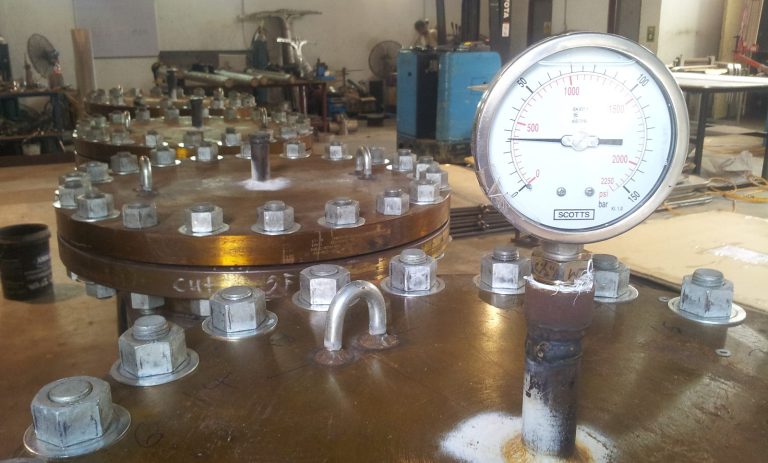

Gauges on the inlet and the outlet, or a differential gauge, show when the basket in service is full; the standby basket takes over and the full one is cleaned while the line runs.
For a line that can stop see the LEAKPROOF simplex basket strainer; for small lines, the LEAKPROOF Y-strainer; for fine filtration on the run, the duplex LEAKPROOF polishing filter.
Cast duplex strainers cover 2 to 8 inches with ANSI 150 flanges; above 8 inches, and for other ratings, materials and layouts, we build fabricated duplex skids. We size each one for the flow, the liquid and the debris.

Two chambers and a selector plug in one cast body, 2 to 8 inches: the table below.

Two compact strainers joined by pipework with changeover valves: our build above 8 inches and for special duties.

Large bodies, quick-opening covers and davits for frequent cleaning; both housings made the same, so either can run.
| Size (in) | L (mm) | L1 (mm) | L2 (mm) | H (mm) | H1 (mm) | d3 (mm) | H3 (mm) |
|---|---|---|---|---|---|---|---|
| 2 | 272 | 420 | 255 | 550 | 280 | 95 | 200 |
| 3 | 315 | 470 | 305 | 640 | 255 | 95 | 200 |
| 4 | 400 | 520 | 350 | 880 | 370 | 107 | 350 |
| 6 | 500 | 750 | 480 | 1060 | 430 | 164 | 400 |
| 8 | 670 | 1030 | 610 | 1350 | 633 | 225 | 600 |
L: face to face. L1: overall length. L2: between the two chambers. H: overall height. H1: base to the outlet centre line. d3 and H3: basket diameter and height. ANSI B16.5 flanges, bolt holes straddling the centre lines; all dimensions in mm. Above 8 inches we build fabricated duplex skids to the line.
| Body | Cast carbon steel or stainless steel; fabricated in carbon steel, SS304 or SS316 |
| Design | ASME standard; 150 psig at 150 °F (10.3 barg at 65.6 °C) for the cast range |
| Changeover | Selector plug (cast); butterfly or ball valves (fabricated) |
| Connections | ANSI B16.5, 150 lb; higher on fabricated skids |
| Basket | Perforated stainless steel, 3 mm holes standard; 1/32, 1/16 or 1/8 inch |
| Mesh lining | 20, 30, 40, 60 or 80 mesh |
| Seals | EPDM or Viton |
| Drains | Threaded plug under each chamber |
| Tests | Hydrostatic; DP and RT on request |
Dimensions are for the standard cast strainers and may change; the general arrangement drawing sent with each quotation gives the certified dimensions and weights.
Baskets, their mesh linings and the cover seals are the parts a duplex strainer uses up. We make baskets in our own works, for our strainers and for other makes, and re-mesh worn ones.
Perforated baskets with handles and cross bracing, made to fit your chambers.

Woven mesh baskets and linings from 20 to 80 mesh, made to size.

Worn baskets re-meshed with new woven mesh on the old frame.
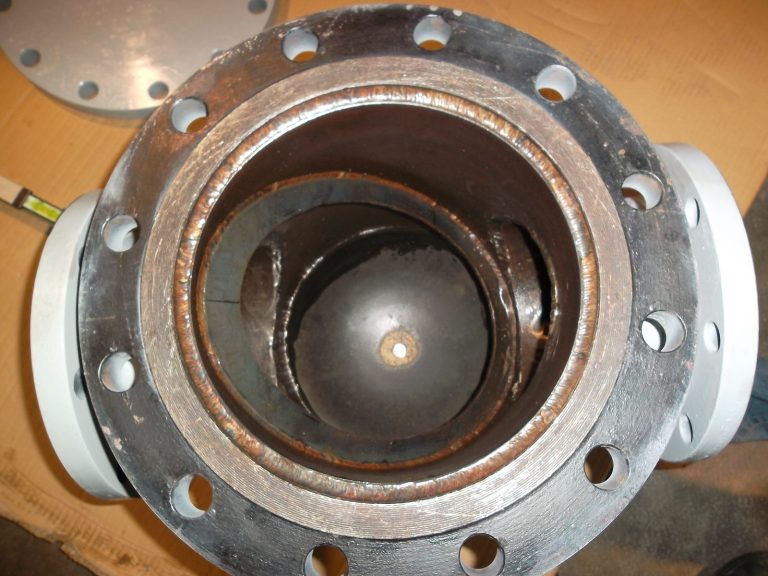
Machined basket seats, cover O-rings and gaskets for our strainers.
Two basket strainers joined by a selector or by changeover valves, so that the flow passes through one basket while the other waits clean. When the basket in service is full, the flow is changed over and the full basket is cleaned without stopping the line.
Turn the selector handle of a cast duplex strainer to the standby side; on a fabricated duplex strainer, open the valves of the standby side first and then close the side in service. Then vent and drain the side that came off line before its cover is opened.
Yes, once the selector or the valves have isolated it, it has been vented and drained, and the gauge on that chamber reads zero. Never open a chamber that is still under pressure.
When the pressure difference across the strainer reaches the value set for your line, read on gauges on the inlet and the outlet or on a differential gauge. Clean the full basket straight away, so the standby side is ready.
Cast duplex strainers are compact and change over with one handle, in the standard sizes up to 8 inches. Above that, and for higher ratings, special materials, davits or quick-opening covers, we build a fabricated duplex skid: two compact strainers joined by pipework with changeover valves.
The baskets land on machined seats, each cover seals on its own O-ring, and the selector or valves close tight, so nothing bypasses a basket or leaks into the side being cleaned. Every strainer is pressure tested before dispatch.
Cast duplex strainers in carbon or stainless steel with ANSI 150 flanges. Fabricated duplex skids in carbon steel, SS304, SS316 and other alloys, with ANSI ratings to suit the line.
Yes. Send a sample, a drawing or the main dimensions and the perforation or mesh you need, and we will make new baskets or re-mesh the old ones.
Send us your duty, a drawing or a photo of your existing unit. A Peltech engineer will reply with options and a quotation.